
How to choose a replacement phone charger
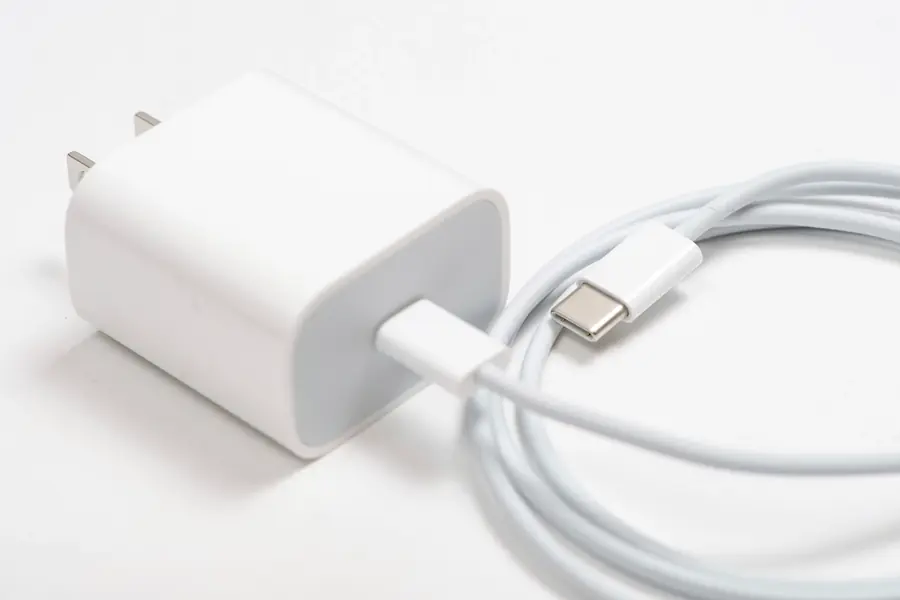
A phone charger wears out, gets lost, or you want a second one for the car or travel. Choosing a replacement is simpler than for a laptop, but here too it pays to know what to look at so it charges the phone quickly and safely.
Phones are more tolerant, but power matters
Unlike a laptop, a phone does not need an exact voltage, because it negotiates for itself how much energy to take. So what matters most is the charger’s power in watts and support for fast charging.
- A weak charger (for example 5 W) charges the phone slowly.
- A more powerful charger with fast charging (for example 20 W and more) charges the phone considerably faster, if the phone supports it.
Fast charging
For fast charging to work, it must be supported by the charger, the cable and the phone. The most widespread standard today is USB-C Power Delivery (PD). Alongside it you will also see Quick Charge (QC) from Qualcomm, used mainly with phones that have their chips. Some brands additionally have their own fast-charging technologies that work fully only with their charger and cable. If the standards do not match, the phone will still charge, just more slowly at the basic rate.
GaN chargers
Modern chargers often use the material GaN (gallium nitride) instead of classic silicon. The benefit is simple: at the same power they are noticeably smaller, lighter and run cooler. So one small GaN charger with several ports replaces a pile of adapters and comfortably charges a phone, a tablet and sometimes even a laptop.
Connector and cable
Modern phones use USB-C, older iPhones the Lightning connector. Note that a quality cable is just as important as the charger, a cheap or damaged cable charges slowly or not at all. You will find more about cables in the article on USB connectors.
Original versus non-original
- An original or quality branded charger is the safe choice.
- Cheap unbranded chargers are a risk, they can overheat, damage the battery or, in extreme cases, catch fire.
Impact on battery life
Fast charging on its own does not ruin the battery, the phone watches the temperature and current and adjusts the power. What the battery does not like is constant heat and sitting at 100 %. A few habits help: do not charge the phone in a hot car or under a pillow where heat cannot escape, and if the phone offers it, turn on optimised charging (the phone tops up to 100 % only just before your alarm). Everyday use between roughly 20 and 80 % is the gentlest on the battery.
Compatibility with the phone
Before buying, check what fast charging your phone actually supports. There is no point buying a 100 W charger for a phone that can only draw 25 W, it simply will not use the surplus. The other way round, a more powerful charger does no harm, because the phone always requests only as much as it can handle. You will find the exact figure in the phone’s specifications under maximum charging power.
What to watch out for
- Power in watts depending on how fast you want to charge.
- Fast charging support on the charger, cable and phone.
- Quality and brand, it does not pay to save on the charger and cable.
- Wireless charging, if your phone supports it and you prefer convenience.
We'll supply the right phone charger
We advise on choosing a safe charger with enough power and fast charging. For homes and businesses in the Liptov region.
Get the right chargerA power bank also comes in handy for travel.
This article is part of our Hardware and components overview.
Frequently asked questions
Does a phone need an exact voltage like a laptop?
What is USB-C Power Delivery?
Does fast charging shorten battery life?
Is the Lightning connector still current?
Why is the cable just as important as the charger?
How do I find my phone's maximum charging power?
Need help with IT?
We will take care of your computers, networks and security - for businesses and households in the Liptov region.
Contact us