
Edge computing from A to Z: a simple explanation for laymen
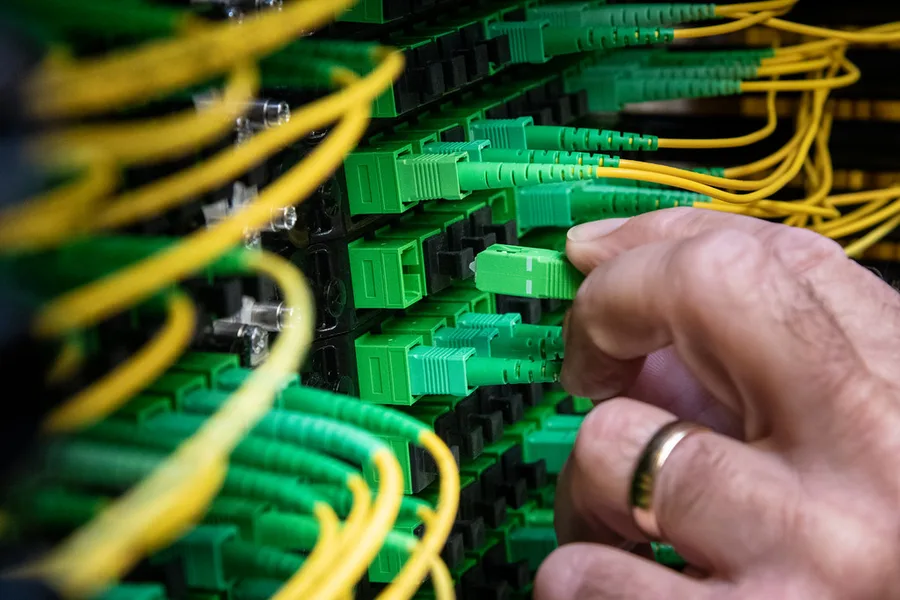
Everyone has heard of the cloud: we send data to big, distant data centers. Edge computing goes the other way, it processes data as close as possible to where it is created. Let us explain what it is, why it makes sense and where you commonly meet it.
What edge computing is
Edge computing means processing data right where it is created, or close to it, instead of having it travel to a distant cloud and back. The word “edge” refers to the edge of the network, that is the devices and places near the user or sensor.
Put simply: instead of “send everything far away and wait for an answer”, the rule is “solve it right on the spot”.
Cloud versus edge
You understand the difference through the path the data has to travel:
- Cloud computing. The data is sent to a big central data center, processed there and the result is sent back. It is far away, more about it in the article what a server is.
- Edge computing. The processing happens near the source: right in the device, in a local gateway or on a nearby small server.
In practice they are often combined: the edge handles what must be instant, and the cloud takes care of demanding computations, long-term storage and the overall picture. This is called a hybrid approach.
Why the edge makes sense
- Speed (low latency). The round trip to a distant cloud is eliminated. This is crucial for things where a decision must be made instantly.
- Less data over the network. You do not have to send everything raw to the cloud. For example, a camera processes video locally and sends only an alert, not the whole stream. This saves bandwidth and cost.
- It works offline too. When the internet goes down or is slow, local processing keeps running.
- Privacy and security. Sensitive data can stay local and does not travel to the cloud as a whole.
Where you meet edge computing
- Smart cameras that recognize motion or a face right in the device, instead of streaming everything to the cloud. It relates to the article a camera system: what to consider.
- Smart homes and voice assistants that process part of it right at your place.
- Industry and manufacturing, where machines must react in real time.
- Self-driving cars, which must decide instantly and cannot wait for the cloud.
- Stores, healthcare and 5G networks, where local processing pays off.
- AI right in the device, when a model runs locally without sending data away.
Edge, cloud, CDN and IoT: how they relate
- IoT (the internet of things) are the devices and sensors that produce the data. The edge often processes it. More in the article what IoT is.
- A CDN (content delivery network) is actually a form of edge approach: website content is stored near the user so it loads fast. More in the article what a CDN is.
- The cloud remains the center for the heavy and long-term, the edge handles the fast and local.
Limits and challenges
- Managing many devices. Instead of one central cloud, you manage many distributed nodes, which is more demanding.
- Limited performance. A small device at the edge does not have the power of a big data center.
- Endpoint security. More devices means more places that need to be protected and updated.
- It is not a replacement for the cloud. Edge and cloud complement each other, they do not compete.
Practical for a layman and a business
- You already benefit from it, for example with smart cameras and assistants.
- For a business the edge pays off where speed, bandwidth, offline operation or privacy matter, that is in manufacturing, stores, camera and IoT systems.
- The right path is most often a hybrid, that is a combination of edge and cloud.
Conclusion
Edge computing processes data near the place where it is created, instead of sending it to a distant cloud. It brings speed, bandwidth savings, offline operation and better privacy. You meet it with smart cameras, in industry, cars and 5G networks. It is not a replacement for the cloud, but its complement, and the best results come from their combination.
Edge computing solutions
We design and deploy camera, IoT or network solutions where data is processed right on site, quickly and reliably. For homes and businesses in the Liptov region.
Get a tailored solutionThis article is part of our Computer networks overview.
Frequently asked questions
What is edge computing, explained simply?
What is the difference between cloud and edge computing?
What are the main benefits of edge computing?
Where do you commonly encounter edge computing?
Does edge computing replace the cloud?
What are the limits and downsides of edge computing?
Need help with IT?
We will take care of your computers, networks and security - for businesses and households in the Liptov region.
Contact us