
What IoT (the internet of things) is: how it works and where it is used
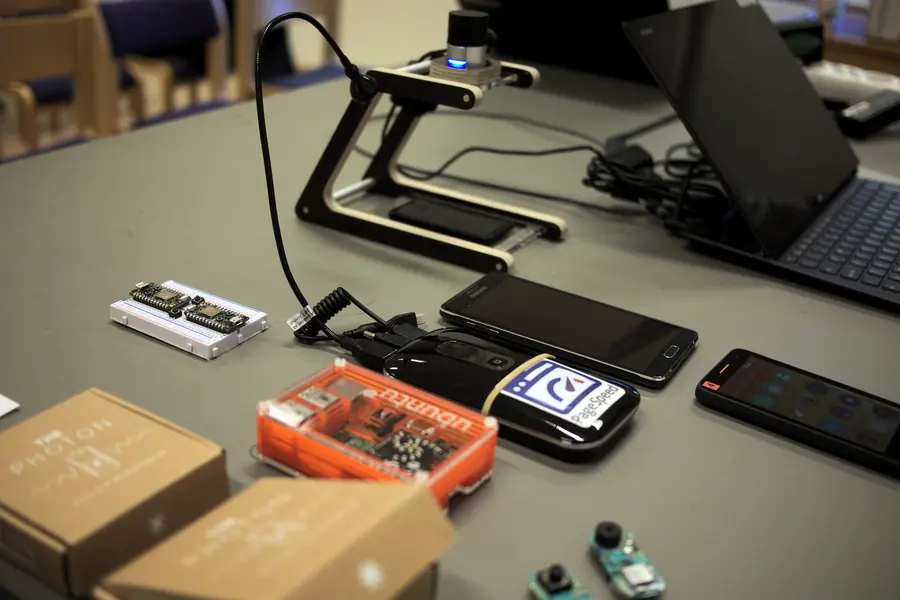
The abbreviation IoT is heard more and more often today, yet few know exactly what it means. Meanwhile we have IoT devices at home and at work, and their number is growing fast. Let us explain in detail what the internet of things is, how it works and where it is used.
What IoT is
IoT (Internet of Things) is a network of ordinary devices connected to the internet that collect data, communicate and can be controlled remotely. It is not a computer or a phone in the classic sense, but objects around us that have been given a connection and a bit of intelligence: bulbs, thermostats, cameras, sensors, watches, appliances or industrial machines.
Simply put, IoT is about things that once just worked now also communicating.
How IoT works
A typical IoT solution has four layers:
- Sensors and devices. They measure or do something in the real world: temperature, motion, humidity, consumption, location.
- Connectivity. The device sends data over WiFi, a mobile network or low-power technologies like Zigbee, more in the article on Zigbee, ESP32, Arduino.
- Processing. The data is evaluated, whether in the cloud or locally, for example via Home Assistant.
- Action and display. Based on the data, something happens (heating turns on) or the value is shown in an app.
Example: a temperature sensor measures cold, sends the value, the system evaluates that it is below the set threshold and turns on the heating. All of this without you.
Where IoT is used
At home
The best-known area is the smart home:
- Smart lighting and thermostats for comfort and savings.
- Security cameras and sensors for door opening or motion.
- Smart appliances and sockets.
- Wearable electronics like watches and fitness bands.
In business and industry
Here it is called industrial IoT and brings the greatest value:
- Machine monitoring and predictive maintenance, where sensors warn of a fault before it happens.
- Tracking goods and vehicles in logistics.
- Measuring energy consumption and optimizing operations.
- Environmental sensors in agriculture and buildings.
Advantages of IoT
- Automation. Things happen on their own according to rules.
- Data and insight. You see what is really happening and can decide based on numbers.
- Savings. Especially of energy and time.
- Comfort and security at home and in operations.
What to watch for: security
Every connected device is also a possible gateway for an attacker. That is exactly why security is key with IoT. Cheap and unupdated devices tend to be the weak link. The basic rules (changing passwords, a separate network, updates) are discussed in a separate article on securing a smart home and IoT.
In brief:
- Change factory passwords.
- Separate IoT into its own network or VLAN.
- Update and choose trustworthy manufacturers.
- Do not expose devices directly to the internet.
Conclusion
IoT is not a distant future, it is the reality around us. It connects the physical world with the digital one and brings comfort, data and savings, but only when it is well designed and secured. And that is exactly what we can help with, from the home to company operations.
Want to use IoT at home or in your company safely and meaningfully? We will design the solution and the network it will run reliably on.
Want your IoT devices connected safely?
We will design the network and IoT setup so it runs reliably and is not a weak point in your security. For homes and businesses in the Liptov region.
Design an IoT setupThis article is part of our Computer networks overview.
Frequently asked questions
What does the abbreviation IoT mean?
What devices count as IoT?
How does an IoT device work in practice?
Where is IoT most commonly used?
Are IoT devices secure?
Why does IoT matter for companies too?
Need help with IT?
We will take care of your computers, networks and security - for businesses and households in the Liptov region.
Contact us