
What is a LAN (local area network) and how it differs from WAN
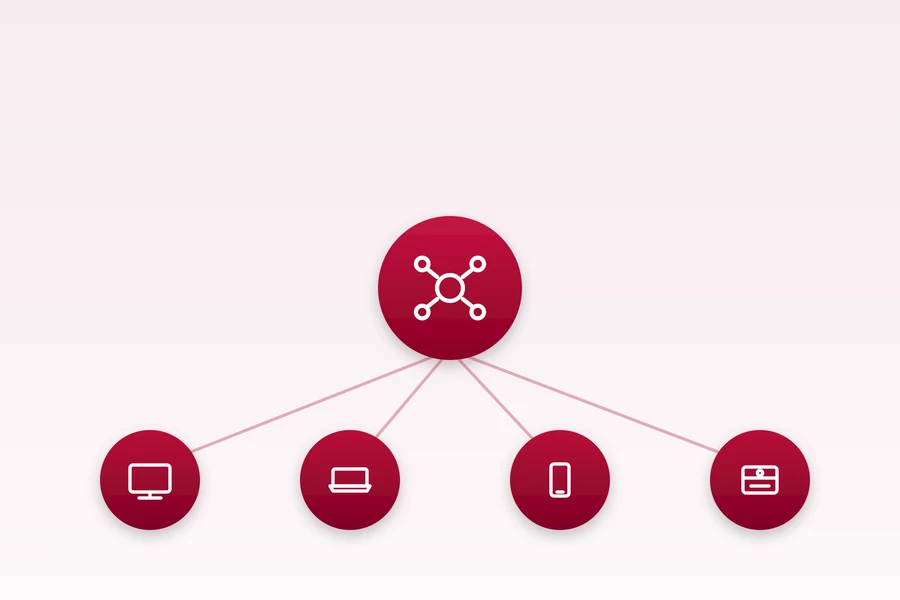
At home or in the office you have devices that can talk to each other: the computer prints to the printer, the phone checks the cameras. A LAN is what connects them all.
What a LAN is
A LAN (Local Area Network) is a network over a small area, for example within a single household, office or building. It connects devices that are close together so they can communicate and share the internet, files or a printer. You will find the basic terms around addresses in network basics.
LAN versus WAN
While a LAN is your local network, a WAN (Wide Area Network) is a large network that connects distant places. The best known WAN is the internet itself. Put simply: the LAN is what you have at home behind the router, the WAN is the world beyond it.
What a LAN is made of
At its heart is usually a router and a switch, which connect the devices by cable or over Wi-Fi. Whether it pays to run a cable or Wi-Fi is enough we cover in a network in the home.
Wired and wireless LAN
A LAN can be wired (ethernet) or wireless (Wi-Fi, sometimes called WLAN). Most households use a combination: important devices on a cable, mobile ones over Wi-Fi.
Why a LAN matters
A well designed LAN is fast, stable and secure. In a company the operational and guest parts are also separated, so a stranger cannot see into company data. When the LAN goes down, it is not one computer that stops, but the whole operation.
Summary
A LAN is your local network that connects devices in one place. The internet (WAN) is what you attach to it. A lot of “slow internet” problems are in fact solved in a well built LAN.
If a well-built network is what your home or business is missing, we are happy to design and build it.
Want a fast and stable LAN at home or work?
We will design and build a local network that is stable, fast and securely separated where it needs to be. For homes and businesses in the Liptov region.
Design a networkThis article is part of our Computer networks overview.
Frequently asked questions
What does the abbreviation LAN mean?
What is the difference between a LAN and a WAN?
What is a WLAN and how does it differ from a LAN?
What is a home or business LAN made of?
Why does a well built LAN matter?
Will a new LAN fix slow internet at home?
Need help with IT?
We will take care of your computers, networks and security - for businesses and households in the Liptov region.
Contact us