
Machine learning from A to Z: a simple explanation for laymen
Behind most of the things we today call artificial intelligence stands machine learning. It sounds complicated, but the basic idea is surprisingly simple. Let us explain it from the ground up, without formulas and jargon.
What machine learning is
Machine learning is a branch of artificial intelligence in which a computer learns from examples and data, instead of having all the rules written in advance. You show it a lot of examples and it finds the patterns and connections itself.
Put simply: you do not give the computer an exact procedure, but a “textbook full of examples” and it learns from it.
Classic programming versus machine learning
You understand the difference through a simple comparison:
- Classic programming. A programmer writes exact rules. You give the computer rules and data, and it calculates the answer.
- Machine learning. The other way around, you give the computer data and the correct answers (examples) and it derives the rules itself. This creates a so called model.
For example: recognizing a cat in a photo is very hard to write with classic rules. It is far easier to show the system thousands of cat photos and let it learn what a cat looks like.
Learning and using
Machine learning has two phases:
- Learning (training). You show the system many examples and it builds a model from them, a kind of learned formula.
- Using (inference). You then apply the finished model to new, unseen data. For example, the trained model gets a new photo and says whether there is a cat in it.
Three main types of learning
- Supervised learning. The examples also have the correct answer (a label). This is how a spam filter learns (this is spam, this is not) or image recognition.
- Unsupervised learning. The data has no answers and the system itself looks for structure and groups in it. For example, it splits customers into similar groups.
- Reinforcement learning. The system learns by trial and error through rewards and penalties. This is how programs learn to play games or control robots.
Where you meet it every day
You use machine learning even without knowing it:
- The spam filter in your email.
- Recommendations of films, music and products.
- Face recognition and photo sorting.
- Voice assistants and speech transcription.
- Fraud detection in card payments.
- Traffic prediction in maps and predictive text on the keyboard.
AI, machine learning and deep learning
These terms nest into each other like boxes:
- Artificial intelligence is the broadest term (the effort to make machines do things that require “intelligence”).
- Machine learning is its subset, where the system learns from data.
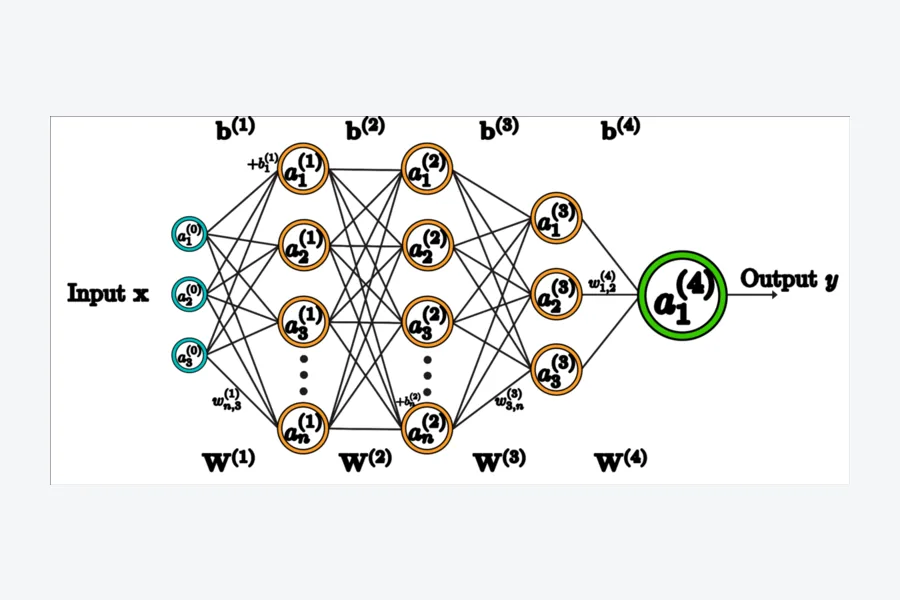
- Deep learning is a subset of machine learning that uses neural networks (loosely inspired by the brain). Today’s advances in image, speech and language models stand on it, more in the article artificial intelligence, AI agents and MCP.
Why data is key
A model is only as good as the data it learned from. The rule “garbage in, garbage out” applies: bad or skewed data produces a bad model. If the data is one-sided, the model takes over its bias too and may, for example, unfairly favor some group. That is why the quality and balance of data matter enormously.
Limits and risks
- Bias. The model inherits prejudices from the data and can discriminate.
- Overfitting. The model “memorizes” the examples instead of a general rule and fails on a new case.
- A black box. With complex models it is hard to explain why they decided the way they did.
- It can be confidently wrong. That is why important decisions belong under human oversight. As with all AI, it is a good servant but a bad master, more in the article AI, a good servant and a bad master.
Practical for a layman and a business
- You already use it. It is not magic, but finding patterns in data.
- Expect mistakes. Verify machine learning outputs, especially for important things.
- For a business machine learning is a path to prediction, automation and personalization, but it stands and falls on quality data. If you want to run AI on your own premises, see the article local AI on your own hardware.
Conclusion
Machine learning is the way computers learn from data and examples instead of written rules. First learning happens (a model is created), then the model is used on new data. There is supervised, unsupervised and reinforcement learning, and the most powerful branch is deep learning with neural networks. It is behind most of the “AI” you use daily. But remember that it is only as good as its data, and that it can be wrong.
Want to use data, AI or automation in your company meaningfully and safely? Get in touch, we will be happy to advise.
Want to put AI and data to good use?
We advise on how to use machine learning, automation or AI safely and with solid data in practice. For homes and businesses in the Liptov region.
Get advice on AIThis article is part of our Artificial intelligence overview.
Frequently asked questions
Is machine learning the same thing as artificial intelligence?
What is the difference between machine learning and classic programming?
What is a model in machine learning?
Why is quality data so important for machine learning?
What is the difference between supervised and unsupervised learning?
Can machine learning be wrong?
Need help with IT?
We will take care of your computers, networks and security - for businesses and households in the Liptov region.
Contact us