
What uptime is and why it matters (with a downtime calculator)
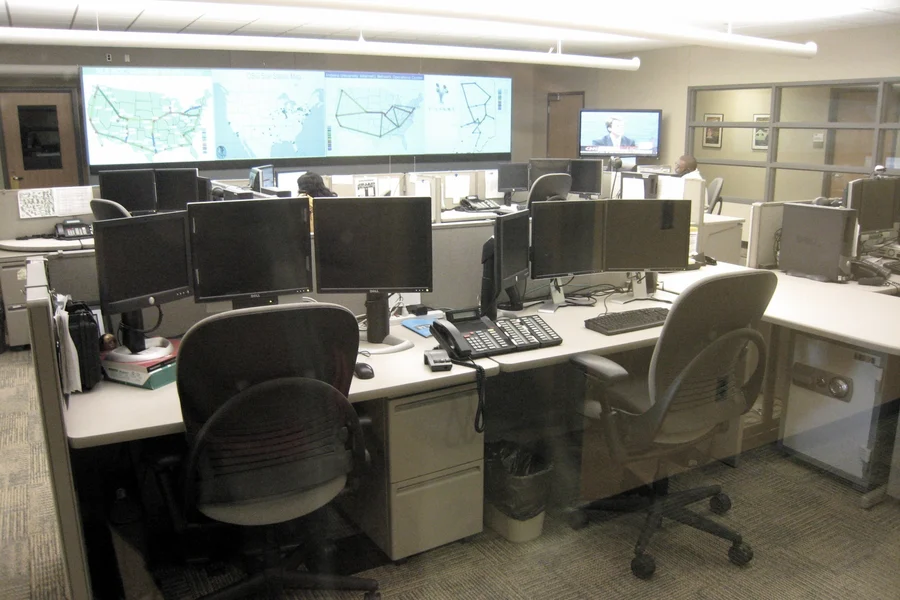
Photo: Alan Levine from United States · CC BY 2.0 · Wikimedia Commons
When a website or service does not work, we talk about an outage. The opposite is uptime, the time during which everything is available. These numbers hide behind promises like “99.9 % availability”, but few know what they really mean. Let us explain it, including a live calculator.
What uptime and downtime are
- Uptime (availability) is the time during which a website or service works and responds, expressed as a percentage over a certain period.
- Downtime (outage) is the opposite, the time when the service does not respond, returns an error or is extremely slow. This also includes scheduled maintenance, unless you explicitly exclude it.
So 99.9 % uptime does not mean everything is always fine. It means a certain amount of downtime is allowed per year, and that amount is surprisingly specific.
Downtime calculator
Enter the target availability in percent and the calculator shows how much downtime it allows per year, month, week and day.
Approximate calculation. Month counted as 30.44 days.
The nines table
Each extra nine means significantly less allowed downtime:
| Uptime | Downtime per year | Per month | Per day |
|---|---|---|---|
| 99 % | about 3.65 days | about 7.3 hours | about 14.4 minutes |
| 99.9 % | about 8.8 hours | about 43.8 minutes | about 1.4 minutes |
| 99.99 % | about 52.6 minutes | about 4.4 minutes | about 8.6 seconds |
| 99.999 % | about 5.3 minutes | about 26 seconds | about 0.9 seconds |
The difference between 99.9 % and 99.99 % looks small, but in practice it is huge, from almost nine hours of downtime per year it becomes less than an hour.
What availability you really need
- An ordinary company website or blog: 99.9 % is a reasonable goal.
- An e-shop and online services: 99.9 % is the minimum, an outage means a direct loss of sales.
- Critical services and applications: toward 99.99 % and higher, but each further nine significantly raises the cost of the solution.
Chasing needlessly high availability does not pay off, the important thing is to choose a goal based on what an outage really costs.
How uptime is measured
A monitoring service periodically checks your website or service (for example with an HTTP request, TCP connection or ping) and records whether it responds. The availability percentage is calculated from these checks and the service alerts you in case of an outage. The principle is discussed in the article on website availability monitoring.
A practical solution is the monitoring platform ePulz.io, which watches website availability, SSL and domains and alerts you immediately on an outage, so you know about a problem before your customers. You can try it for free during a 7-day trial.
The most common causes of lost “nines”
- Overload during a surge in traffic or a DDoS attack.
- A hosting or server outage.
- An expired SSL certificate, more in the article on an SSL certificate.
- An internet outage, where a backup connection helps.
- An error during an update or deployment.
Conclusion
Uptime is a measure of availability expressed in percent, and each extra nine means significantly less allowed downtime. For an e-shop and online services, availability is directly about money. The key is to choose a reasonable goal, measure availability and know about outages right away.
Website availability monitoring
We set up monitoring for your website, SSL certificate and domain that alerts you the moment something goes down. For homes and businesses in the Liptov region.
Get monitoring set upThis article is part of our Computer networks overview.
Frequently asked questions
What does 99.9 % availability actually mean?
What is the difference between uptime and an SLA?
Does scheduled maintenance count as downtime?
How is website availability measured?
What availability should an ordinary business website have?
What most commonly causes a website outage?
Need help with IT?
We will take care of your computers, networks and security - for businesses and households in the Liptov region.
Contact us