
Building or renovating? Where to place the data cabinet
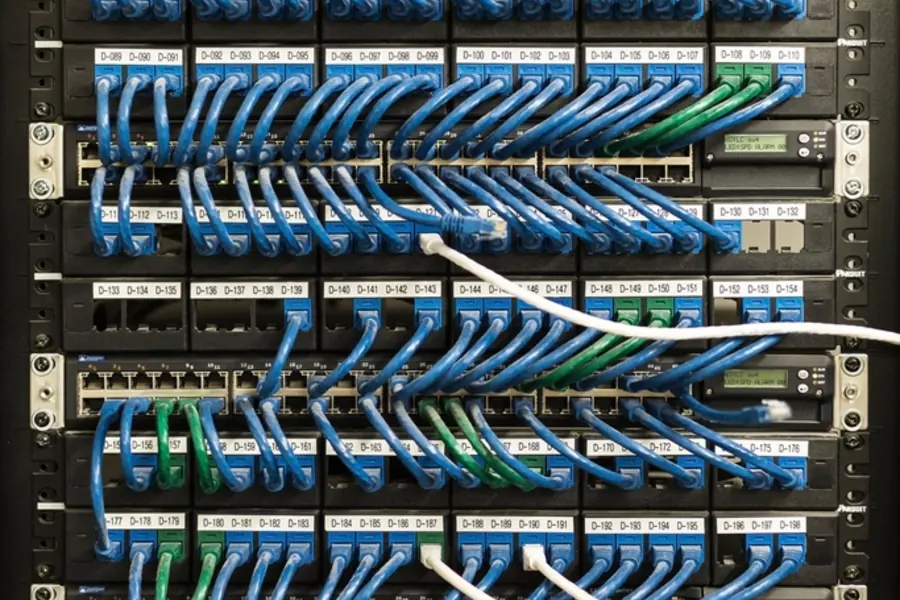
When building or renovating, the network is often thought of last, yet that is exactly when it is cheapest and simplest to do it properly. The key decision is where to place the data cabinet and where to concentrate all the cabling. This decision will either make your life easier for years or be a permanent complication. Let us get to it.
Why a central point matters so much
A modern network works so that a cable runs from every room to one central point, where they meet and connect to the network equipment. This point is called a data cabinet (rack). When it is well placed and the cabling is thought through, the network is clear, reliable and easy to expand. The principle of wiring is complemented by the article on how many ports the switch and how many sockets in a new build.
Where to place the cabinet
The ideal spot meets several conditions:
- Central. As close as possible to the center of the house or building, so the runs to rooms are short and balanced.
- Accessible. So you can comfortably reach it for maintenance and expansion, not walled in behind furniture.
- Dry and reasonably cool. Not in damp (a humid cellar) or in heat (under the roof in direct sun). Electronics tolerate neither damp nor heat, this relates to temperature monitoring.
- Near power. Within reach of electricity, ideally on a separate protected circuit.
- With extra room. The cabinet should have headroom for future devices.
Common good spots are a utility room, a pantry, a closet or a dedicated part of a hallway. Avoid the bathroom, kitchen and damp or dusty spaces.
Where to concentrate the cabling
- In a star to one point. From every socket in the rooms, run a separate cable all the way to the cabinet, not chained from one to another.
- Enough sockets. Better more data sockets per room, adding them later is expensive and complicated.
- Quality cables. At least CAT6, more in the article on network cables CAT5e, CAT6, CAT7. Where large distances or future headroom are needed, consider fiber.
- Extra conduits (tubes). Lay at least one empty conduit in reserve, so cables can be pulled in the future without demolition.
- Think about power over the network (PoE). Cameras and WiFi points are powered over the same cable, more in the article on PoE.
What not to forget
- Power and a backup supply (UPS), so the network survives a short power outage.
- Cabinet ventilation, so devices do not overheat.
- Labeling cables and sockets. Labeled wiring saves hours with every change.
- Headroom for the future. Cables are pulled once, so better more and higher quality.
Why address it during construction
Laying cables and preparing the cabinet during construction or renovation is cheap and simple. Doing it later into finished walls means demolition, dust and higher costs, or a makeshift WiFi solution that never replaces a proper cable, more in the article on a home network: cable versus WiFi.
Conclusion
A data cabinet belongs in a central, accessible, dry and reasonably cooled spot near power and with headroom. Concentrate the cabling in a star to this one point, use quality cables, enough sockets and do not forget conduits and labeling. A few thoughtful decisions during construction guarantee you a reliable and expandable network for years.
Building or renovating and want the network done properly? Get in touch, we will design the cabinet placement and cabling to measure, while the walls are still open.
Planning the network wiring for a build or renovation?
We will design the cabinet placement, cable runs and socket count exactly for your house. For homes and businesses in Liptov.
Ask us, no obligationThis article is part of our Computer networks overview.
Frequently asked questions
Where is the best place for a data cabinet in a house?
Why should a cabinet avoid a cellar or the space under the roof?
How should cabling from individual rooms be run?
How many data sockets should be prepared per room?
What should not be forgotten when preparing the cabinet?
Why handle the cabinet and cabling during construction?
Need help with IT?
We will take care of your computers, networks and security - for businesses and households in the Liptov region.
Contact us