
Camera systems for home and business: what to consider before buying
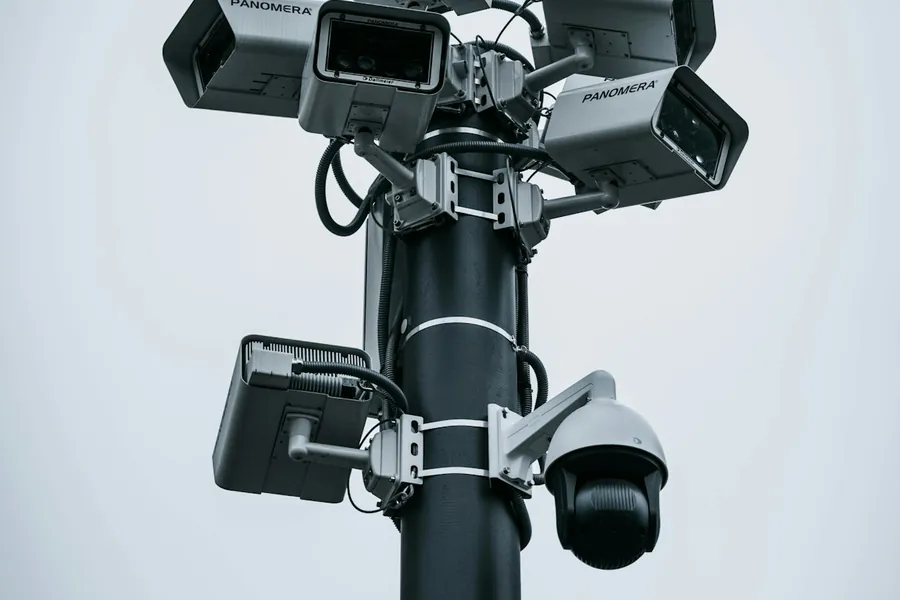
A camera system is today an affordable and effective way to protect your home, workshop or business premises. The choice, however, is enormous and the differences in quality are vast. A cheap kit from an online shop and a professionally designed system have only the word “camera” in common. Here is what really matters.
Megapixels are not everything
Marketing pushes numbers, but resolution alone does not determine image quality. A sensible standard today is 6 megapixels, which gives enough detail to reliably recognise a face or a licence plate. Just as important, though, are the quality of the lens and the sensor and the so-called bitrate, that is, how much data the camera devotes to the recording. A nice megapixel figure on a poor sensor produces only a larger but blurry image.
Pay attention to the H.265 (HEVC) codec as well. At the same quality, the recording takes up significantly less space than the older H.264, so you can keep footage on the same disk for much longer.
Go with IP cameras and PoE
Modern systems are built on IP cameras that connect to the network. Their big advantage is PoE (Power over Ethernet): a single network cable carries both power and data. There is no need to run electricity to the camera, which simplifies installation and improves reliability. Older analogue cameras only make sense when extending an existing analogue installation.
Night vision and durability
Many incidents happen in the dark, which is why quality night vision is essential. Ordinary cameras switch to a black-and-white IR mode, while better models can manage colour night vision even in minimal light. For outdoor cameras, look for an IP66 rating or higher, which guarantees resistance to rain, dust and frost.
Storage should be calculated, not guessed
Footage is saved to an NVR recorder with a hard drive. The size of the disk is not a matter of gut feeling; it can be calculated from the number of cameras, their bitrate and the required retention period (for example 14 or 30 days). An undersized disk means older footage gets overwritten before you need it. For important premises it also pays to keep a backup off-site, so you do not lose the footage if the recorder itself is stolen.
Try a rough estimate. Enter the number of cameras, the resolution, the codec, the recording mode and the number of retention days, and the calculator estimates the disk capacity needed.
The estimate is approximate. The real size depends on the scene, motion, frame rate and camera settings.
Security: cameras do not belong directly on the internet
A common and dangerous mistake is to expose the recorder directly to the internet for viewing from a phone. Bots on the network search for such devices and attack them. We handle remote access via a VPN or a secured gateway, so that no stranger can get into your cameras. A properly configured network is therefore part of a quality system, not just the cameras themselves.
Watch out for GDPR
For business cameras and cameras capturing public space, GDPR rules apply: an information notice, a reasonable scope of recording and a defined retention period. A camera must not needlessly record your neighbours or the public footpath beyond what is necessary. Correctly configured recording zones save problems later on.
Leave it to us
A quality camera system is not just about cameras, but about the design of the layout, the cabling, the network and securing access. We will design and install a tailored camera system for your home or premises, including mounting, setting up secure remote access on your phone and training the operators.
Get in touch and we will prepare a no-obligation proposal.
This article is part of our Camera systems overview.
Frequently asked questions
How many megapixels should a home security camera have?
What is PoE and why is it worth it for cameras?
How much storage do I need for camera recordings?
Can cameras be exposed directly to the internet?
Do I need to deal with GDPR when installing cameras?
Will you install a camera system for us?
Need help with IT?
We will take care of your computers, networks and security - for businesses and households in the Liptov region.
Contact us