
Battery capacity on the box versus real: how it is measured
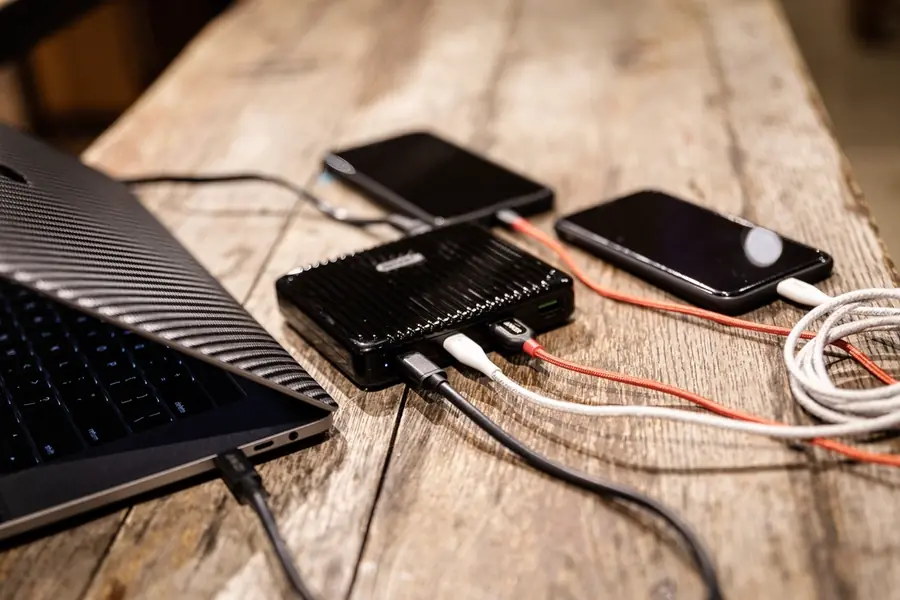
A power bank or battery has a big number in mAh written on it, but the reality tends to be different. The real usable capacity is almost always lower than the box promises. Let us explain why, what those numbers mean and how real capacity can be precisely measured.
What mAh and Wh mean
On batteries we see two units:
- mAh (milliamp-hours) is the most common figure. It speaks of capacity, but only at a certain voltage. mAh alone, without voltage, does not tell the whole truth.
- Wh (watt-hours) is a more precise figure, because it includes voltage. Wh = voltage times capacity. For comparison they are more reliable.
This is exactly why two power banks can have the same mAh but different real energy.
Why declared and real capacity differ
The difference is not always fraud, often it is technical. The main reasons:
- The figure applies to the internal cells at their low voltage (usually 3.7 V). When charging over USB (5 V and more) the energy is converted and some is lost.
- Losses during voltage conversion. The electronics that change voltage convert part of the energy into heat.
- Efficiency is never one hundred percent. Usable capacity commonly sits significantly below the paper value.
- Overstated numbers on cheap products. Some manufacturers state unrealistic values that do not match reality.
So it is completely normal that you cannot charge a phone from a power bank as many times as the number would suggest.
How real capacity can be measured
This is key: real capacity can be precisely measured. A load tester (power load tester) serves this purpose, discharging the battery in a controlled way and precisely measuring how much energy it really gives.
- The device draws a defined current from the battery and sums the delivered energy.
- The result is the real capacity in mAh and Wh the device actually delivers.
- The difference between the number on the box and reality is immediately visible.
Such a measurement reveals not only efficiency, but also poor-quality or overstated units and aging batteries that have lost capacity.
When measuring is useful
- When buying a power bank, to check it matches the declared value.
- When suspecting a poor-quality or fake product.
- With an older battery that drops fast, this relates to the article on laptop battery life.
- During a complaint, where proof of the number is useful.
The article on how to choose a power bank helps with the choice. Measurement and chargers also relate to the article on adapter power: paper versus real.
Conclusion
The number on the box is just a paper value under ideal conditions. The real usable capacity is lower and varies from unit to unit. The good news is that it can be precisely measured with a load tester, and so you can reliably find out what you really bought.
Curious about your battery's real capacity?
We will precisely measure the capacity of your power bank or battery and compare it with the declared value. For homes and businesses in the Liptov region.
Book a measurementThis article is part of our Hardware and components overview.
Comments and questions 0
We keep the discussion to the point. Ads, links to other services, profanity and personal attacks will not be published. Neither will posts containing other people's personal data.
Frequently asked questions
Why is a power bank's real capacity lower than the stated mAh?
What is the difference between mAh and Wh?
How can the real capacity of a battery be measured?
Do power bank manufacturers lie about the stated capacity?
Why does a power bank not charge a phone as many times as the box promises?
When is it worth measuring a battery's real capacity?
Need help with IT?
We will take care of your computers, networks and security - for businesses and households in the Liptov region.
Contact us