
Monitoring the temperature of a server room and IT space
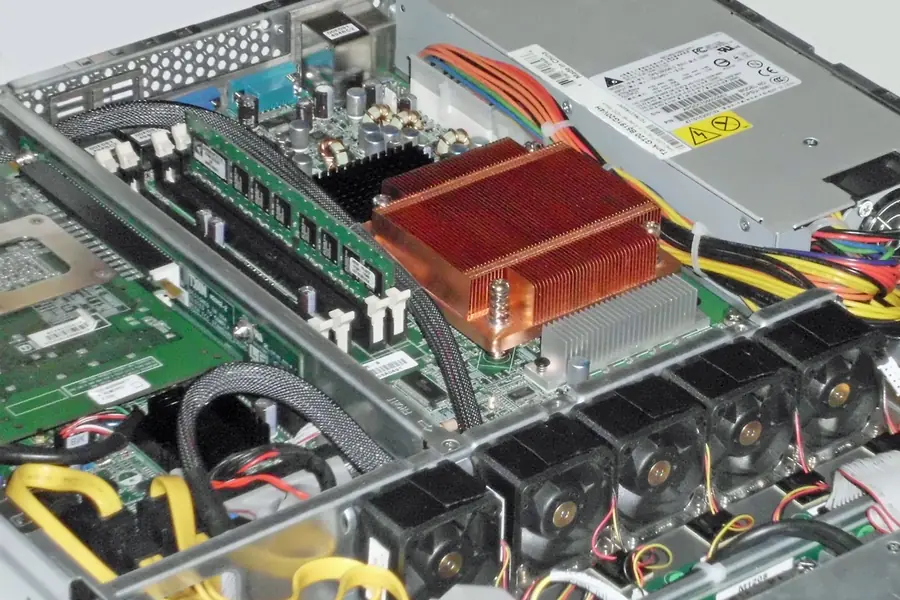
Servers, network equipment and disks produce heat, and heat is their enemy. When the temperature in a server room rises too high, devices slow down, shut off or get damaged, and that means an outage and data loss. That is why it pays to watch the temperature. Let us explain how.
Why temperature matters
Electronics are built for a certain temperature range. When overheating:
- Devices slow down. Processors reduce performance so as not to be damaged.
- There is a risk of shutdown or restart. Protection would rather turn the device off.
- Lifespan drops. Long-term heat wears out components, especially disks.
- Risk of outage and data loss, which is the worst with a server.
Overheating often comes quietly: the air conditioning fails, ventilation gets clogged or it is a hot day, and by the time someone notices, it is too late.
How temperature monitoring works
The principle is simple and reliable:
- Temperature sensors placed in the server room or rack continuously measure the temperature.
- The system collects the data and watches whether it is in order.
- When a threshold is exceeded, it triggers an alarm and alerts you (email, SMS, notification), so you have time to react before damage occurs.
More advanced solutions also measure humidity, door opening or a power outage.
What to watch
- Temperature in several places, not just one value. Warm air accumulates at the top and near devices.
- The trend, not just the instant value. A slow rise reveals an approaching problem in time.
- Related things: the functioning of cooling, humidity, power.
How to prevent overheating
- Adequate cooling according to the amount of devices and heat.
- Free airflow. Do not block ventilation and tidy the cables.
- Regular cleaning of dust, which worsens cooling, this relates to maintenance.
- A power backup (UPS), so a power outage does not also take down the cooling.
- Monitoring and alarms, so you know about a problem right away, a similar principle to availability monitoring.
Who it makes sense for
- Companies with their own server room or rack.
- Operations with network cabinets and active equipment.
- Anywhere an important server or NAS runs, whose outage would hurt.
Even a small room with a few devices can overheat in summer, so it is not just a problem of large data centers.
Conclusion
Temperature is a silent enemy of servers and network devices. Sensors and alarms alert you before overheating causes an outage and data loss, so you have time to react. Combined with good cooling and a power backup, it is a cheap insurance against an expensive problem.
Want to keep your server room temperature under watch and avoid overheating? Get in touch, we will design and deploy sensors and alarms to measure.
Temperature sensors and alarms for your server room
We install temperature, humidity and power monitoring that alerts you before an outage happens. For homes and businesses in the Liptov region alike.
Secure your server roomThis article is part of our Data backup and recovery overview.
Frequently asked questions
Why is high temperature in a server room dangerous?
How exactly does server room temperature monitoring work?
What values should you watch besides temperature?
How do I notice a server is overheating before something breaks?
Is temperature monitoring worth it for a small server room too?
How does a power backup (UPS) relate to server room temperature?
Need help with IT?
We will take care of your computers, networks and security - for businesses and households in the Liptov region.
Contact us