
Home network: when to run cable and when Wi-Fi is enough
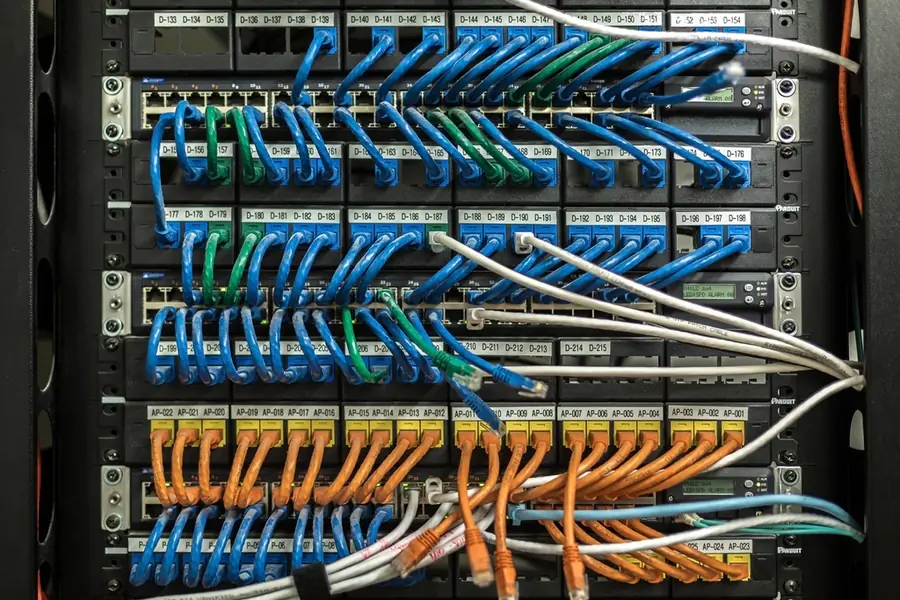
We have Wi-Fi everywhere these days, so why still run cables? Because wireless is not always the best choice. Sometimes a few metres of cable solve a problem you would fight with Wi-Fi for years. Let us look at when a cable is worth it and when wireless is perfectly fine.
When a cable is better
A network cable makes sense everywhere a device stays in one place and you want certainty:
- a desktop computer, TV, games console or NAS and home server benefit from a stable and fast connection,
- Wi-Fi transmitters (access points) connect by cable and only they then spread the signal around the house,
- cameras can be both powered and connected by a single cable (PoE technology).
A cable has lower latency, a more stable speed and is not ruined by a microwave oven or your neighbour’s network.
When Wi-Fi is enough
Wi-Fi is irreplaceable for devices you carry around the house: phones, tablets and laptops. And of course wherever a cable cannot be run. For these devices wireless is exactly the right thing.
The best is a combination of both
Good networks are not “either, or”. The backbone is cable run to key rooms and to the access points, and on top of it runs quality Wi-Fi for mobile devices. Every device then gets what it needs and the signal covers the whole house. This is exactly why several access points on a cable always beat a Wi-Fi repeater, which only repeats the signal in a weakened form.
The cheapest option is to think about it while building
This is the advice that saves the most: if you are building or renovating, have quality shielded network cables (FTP, Cat6a category) run to key rooms while the walls are open. The shielding reduces interference and Cat6a handles even 10 Gbit/s, so the cabling is ready for many years ahead. A few metres of cable in the wall are cheap then; running it afterwards in a finished house is expensive and annoying.
Think about the living room (TV), the study, spots for access points and cameras. Even if you put Wi-Fi everywhere today, in a few years you will be glad the cable is already in the wall.
Connecting two buildings is a different story
A chapter of its own is connecting the house with a garage, workshop or a second building. Be careful here: an ordinary copper cable run between two structures with their own earthing can carry a surge during a storm and damage equipment at both ends. For connecting buildings it is therefore safer to use fibre, which does not conduct electricity at all, or a copper cable with proper surge protection. The cable runs underground in conduit, so it is protected and can be replaced if needed.
Network design for building and renovation
We design and build cabling and Wi-Fi that really works, including connecting separate buildings. For homes and businesses in the Liptov region.
Get a network designThis article is part of our Computer networks overview.
Frequently asked questions
When is it worth running a network cable instead of Wi-Fi?
When is Wi-Fi enough without a cable?
What cable should be used when building or renovating a house?
Why are several access points on cable better than a Wi-Fi repeater?
How do you safely connect two buildings with a network cable?
What is PoE and what is it used for with cameras?
Need help with IT?
We will take care of your computers, networks and security - for businesses and households in the Liptov region.
Contact us